
Part of the FX200 Webinar Series: Exploring layered materials with automated Atomic Force Microscopy

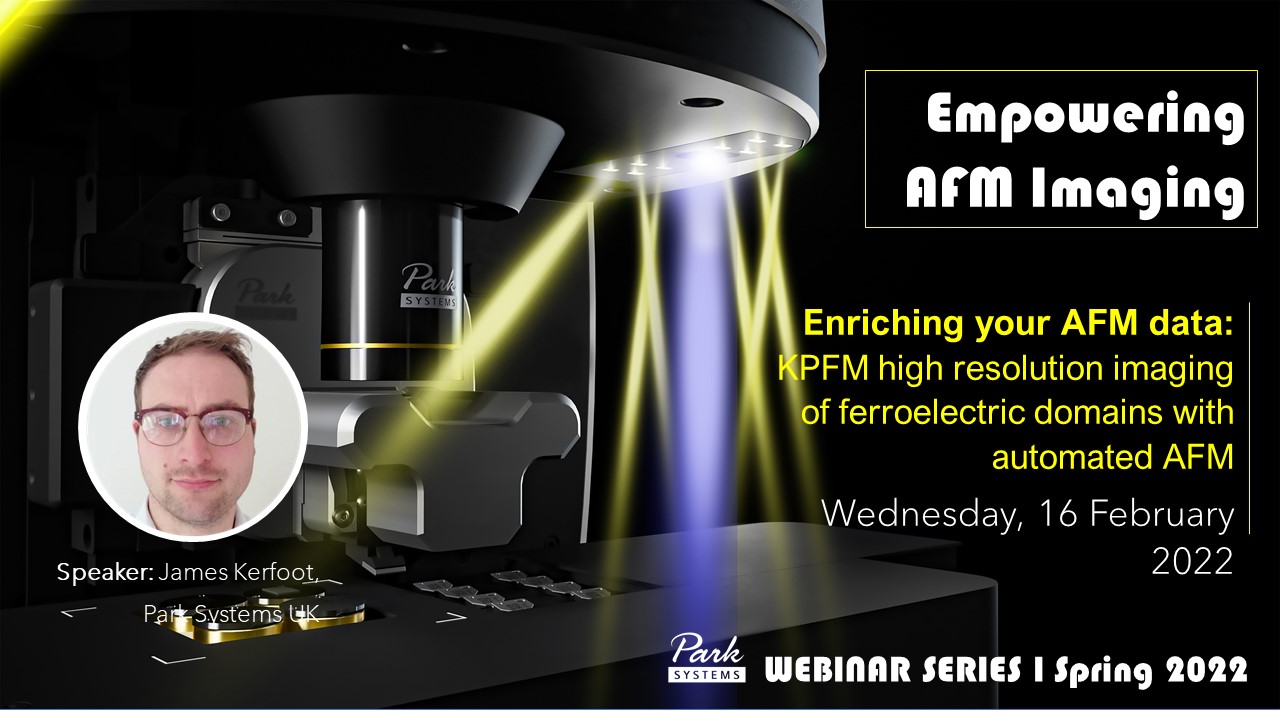
Layered materials (LMs) are widely studied as they have promising properties for applications ranging from energy storage to electronics to quantum optics. There are myriad examples of layered materials, and these can be stacked together to form all manner of heterostructures with different layer species, thicknesses, orientation, strain and doping. Given this materials class is so diverse, possesses many different types of interesting physical properties and is the focus of ever-increasing efforts to scale up its production, an automated tool to study its properties at the nanoscale is invaluable for their study.
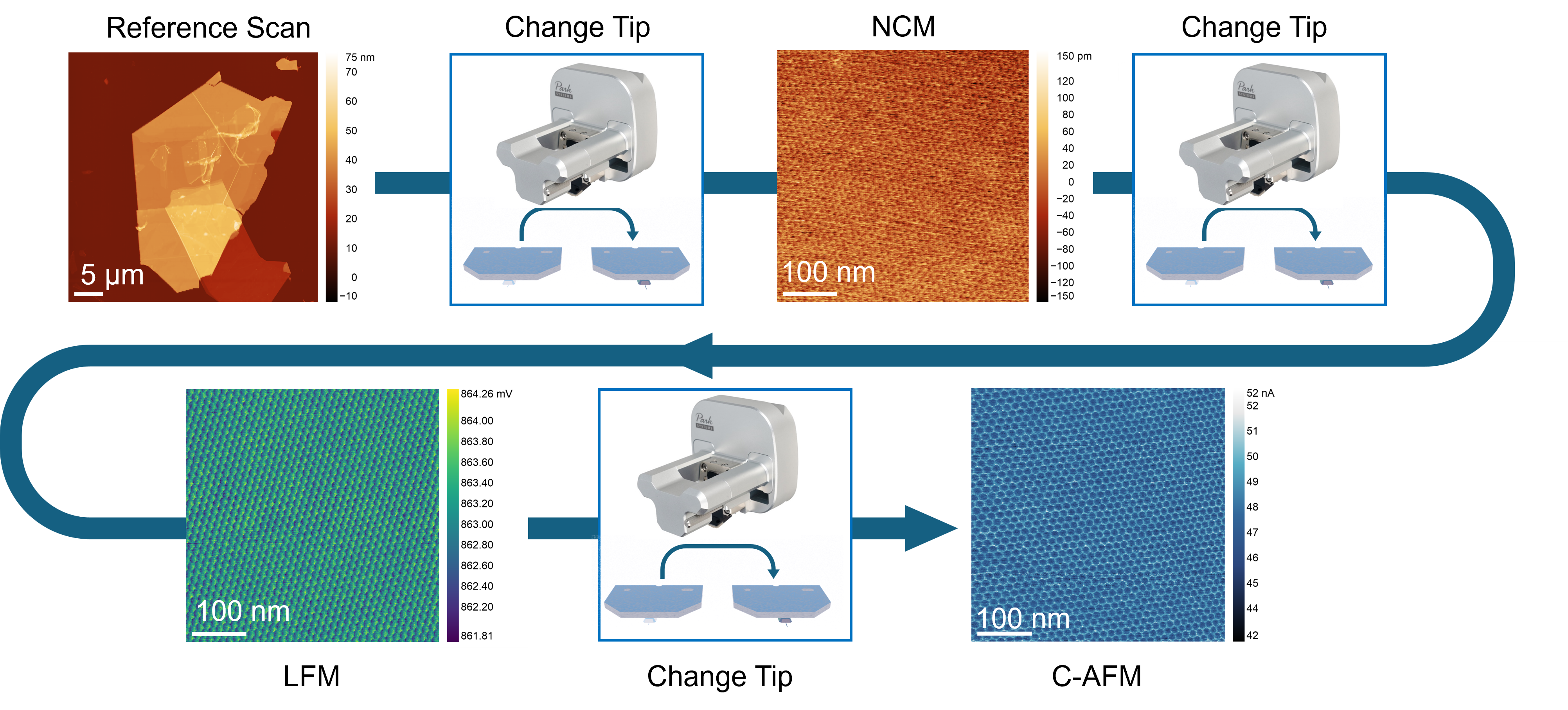
In this webinar we showcase the automation capabilities of our FX200 AFM. By automatically exchanging to a suitable specialised probe and reconfiguring the hardware for a given measurement, we demonstrate that its possible to easily acquire high resolution images in multiple modes at multiple locations. This capability will be exemplified by measuring moiré patterns on different samples (graphene on hexagonal boron nitride and ~0° twisted bilayer molybdenum disulphide) using non-contact mode (NCM), lateral force microscopy (LFM) and conductive AFM (C-AFM). By combining a platform that delivers high resolution images with a robust workflow to reliably and automatically measure multiple samples, we demonstrate the opportunities truly automatic AFM offers to accelerate materials discovery and scale-up.
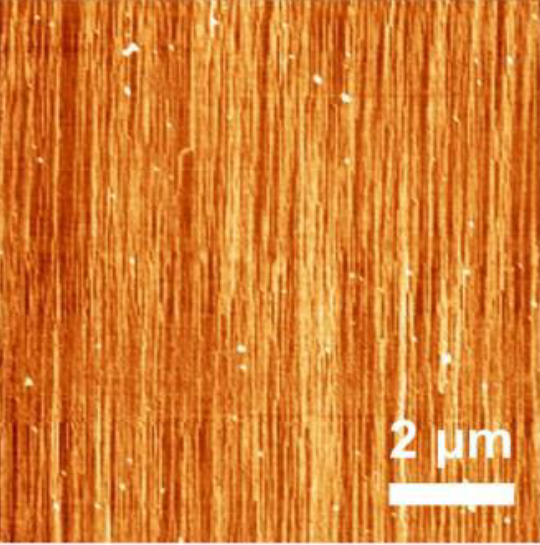
Atomic force microscope image of unidirectionally directionally controlled grown nanofibers
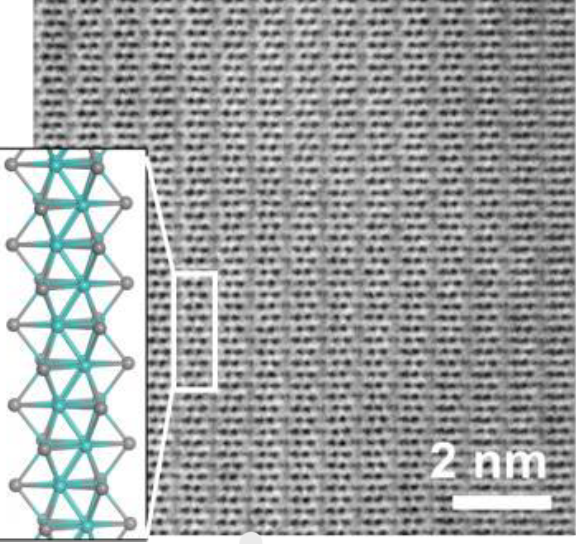
Electron microscope image and structural model of TMC atomic wire nanofibers aggregated in the same direction
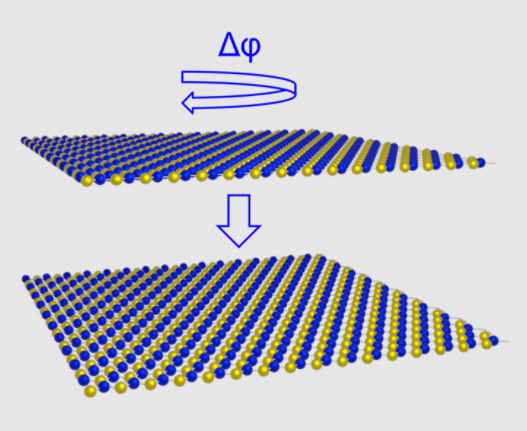
Image caption
Image caption
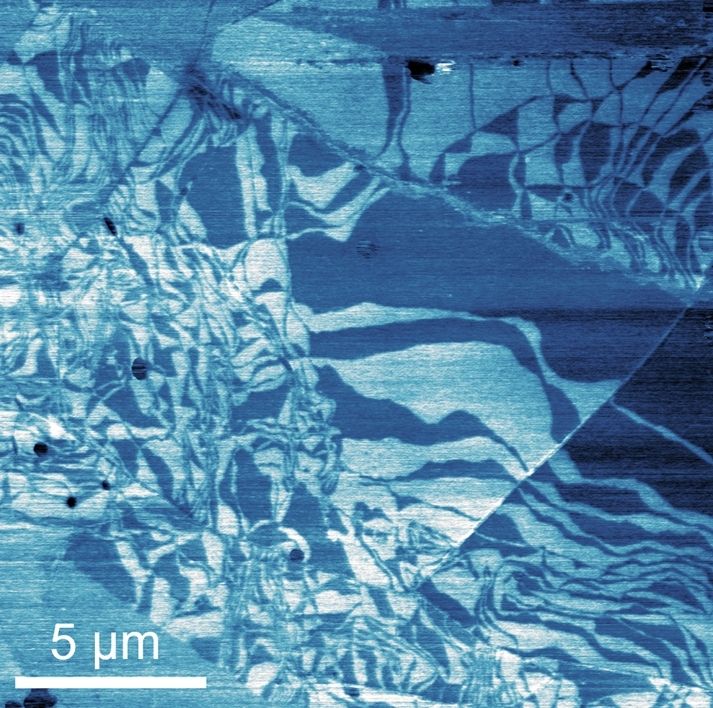
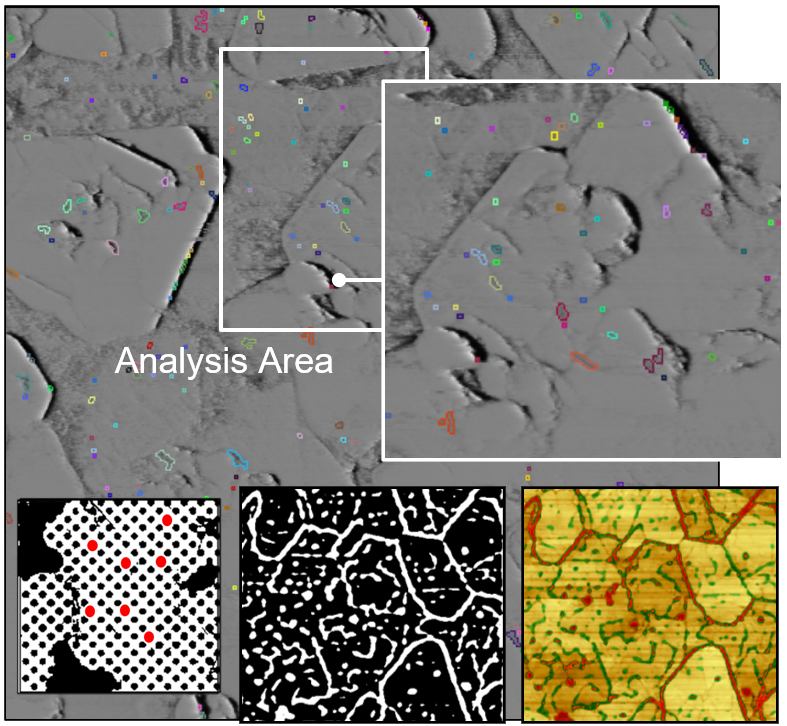
Ferroelectricity is observed in hexagonal boron nitride(hBN) through control of the registry of stacked layers, which we explore through both amplitude-modulated and sideband Kelvin probe force microscopy (KPFM) on the Park FX40 automatic AFM.
A schematic of the formation of parallel stacked bilayer hBN is shown in addition to a contact potential difference map measured using sideband KPFM.
Image caption
Image caption
Image caption


James received his PhD in Physics from the University of Nottingham in 2018, studying the morphology and optical properties of monolayers of self-assembled molecules and their heterostructures. He then went on to work as a postdoctoral researcher, also at the University of Nottingham, working on the formation of hybrid heterostructures of molecular assemblies and layered materials demonstrating both electroluminescence and selective triplet excitation. In 2020, James took up a position as a postdoctoral researcher at the Cambridge Graphene Centre, using scanning probe microscopy and optical spectroscopy to study electrostatics and optical properties of layered materials heterostructures with controlled twist angle and their scalable incorporation into integrated photonic circuits. From January 2022 to 2024, James was a member of the Park Systems team working as an applications scientist, supporting customers with interest ranging from fundamental physics to industrial scale production in the application of a diverse range of scanning probe microscopy techniques. Following an 18-month postdoctoral position working on tip-enhanced Raman spectroscopy at the University of Nottingham, James rejoined Park Systems in August 2025 working as a technical marketing and applications scientist, showcasing and supporting the implementation of state-of-the-art automated AFM.